
MoonLit - Werewolf Novels
FMPROJECT LIMITEDBooks & Reference
4.6834.00 Reviews
- Version
- 1.15.4
- Installs
- 100.00K
- Age Rating
- Teen
Screenshots

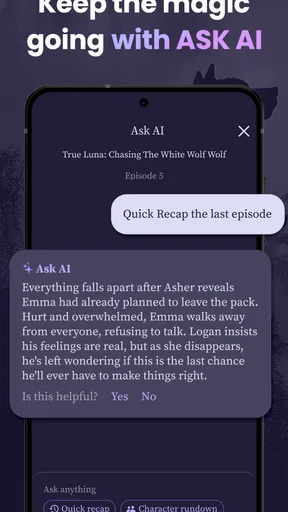
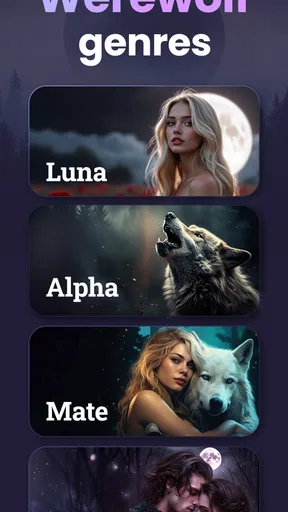
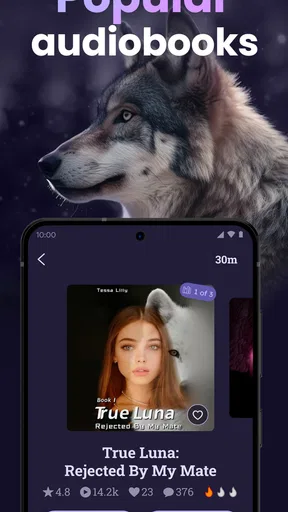
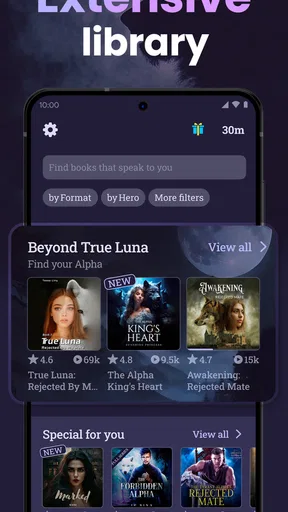
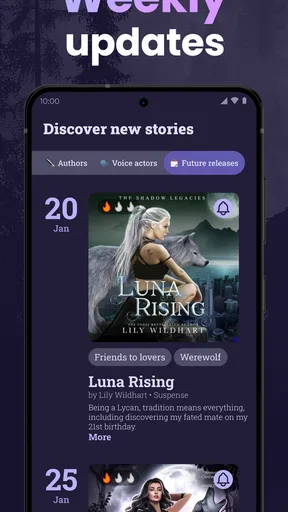
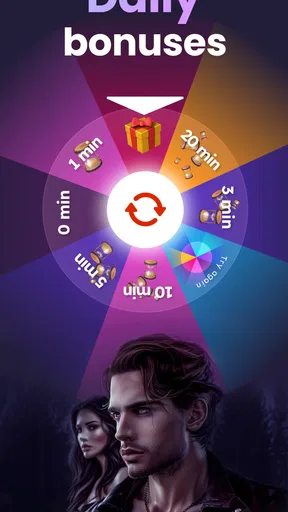

Our Review of MoonLit - Werewolf Novels
 Analysis by Appyee
I approached MoonLit as a reading app rather than simply another place to browse romance titles. Its focus is narrow and clear: werewolf fiction, romantic stories, and audiobook listening for people who enjoy dramatic, serialized storytelling. That specialization is its biggest appeal. Instead of sorting through a huge general library, I could enter with a particular mood already in mind and spend more time choosing a story than searching for the right category.
It is a free Books & Reference app from FMPROJECT LIMITED, with a Teen content rating. The current version is 1.15.4, and it runs on Android 8.0 or later. The app has built a 4.6 average from around 5.4 thousand ratings, alongside more than 100 thousand installs. Those figures suggest that it has found a real audience, although they do not change the more important question: whether its specialized selection matches your reading habits.
How MoonLit feels during everyday reading and listening
The first thing I noticed about this kind of app is how quickly a focused catalog can make a reading session feel intentional. With a broad ebook or audiobook service, I often lose time comparing unrelated genres, formats, and recommendations. Here, the werewolf and romance emphasis gives the experience a stronger identity. If you already like supernatural relationships, pack dynamics, emotional conflict, and long-running romantic plots, the theme helps reduce the distance between opening the app and starting a story.
That does not mean every session will feel instantly fast. A specialized catalog still needs browsing, and readers who are selective about writing style, narration, pacing, or character themes may take time before committing. My practical advice is to treat the opening part of a session as a sampling stage. Read enough of a description or listen long enough to judge the mood before deciding whether a title deserves a longer evening session.
For a realistic daily use case, imagine a commute or a quiet household chore. You may not want to hold a book, but you still want a continuing story. An audiobook-centered romance app can fit that moment better than a conventional ebook reader. Later, when you have uninterrupted time, the same type of story can work as a text-reading session. That flexibility is useful, but it depends on how comfortably you move between the available reading and listening options in each title.
The main speed advantage is not a benchmark result; it is the reduced search effort created by the app’s narrow subject. If your taste already matches its theme, the path from curiosity to content can feel shorter than it does in a general-purpose reading platform. If you want crime, history, science fiction, nonfiction, or children’s books as well, the specialization becomes a limitation rather than a performance benefit.
What happens when a session becomes demanding
Long reading sessions are where an app like this earns its place. A short visit to check a recommendation is easy for almost any reading service, but the real test is whether MoonLit remains comfortable when you return repeatedly to serialized novels and audiobooks. I found the concept best suited to readers who enjoy gradual story development and are willing to make the app part of a routine rather than use it once and leave.
Heavy use can mean several different things. It may mean reading multiple chapters in one sitting, listening for a long period, switching between browsing and a story, or returning to the same novel across several days. Each pattern puts a different kind of pressure on the experience. Extended listening makes battery use and audio continuity more important, while long text sessions make navigation and remembering your place more important. I would judge the app by the task you actually plan to perform, not by a quick opening screen.
One useful workflow is to separate discovery from consumption. During a short break, browse and identify a few promising werewolf romance stories. During a longer uninterrupted period, choose one and stay with it instead of repeatedly returning to the catalog. This reduces decision fatigue and makes the app feel less like a storefront and more like a personal reading queue. It is a small habit, but it matters when a catalog is built around ongoing stories rather than one-off articles.
A second practical tip is to plan audiobook use around your surroundings. Listening while walking, cooking, or commuting is convenient, but noisy environments can make emotional dialogue harder to follow. For important chapters, I prefer a quieter setting or text reading, especially when the plot introduces new characters or relationship details. The app’s theme may attract you with dramatic premises, but following a serialized story still requires attention.
There is also a trade-off between variety and continuity. A dedicated werewolf fiction service can make it easier to find stories with familiar themes, yet that same focus may make several titles feel too similar if you read them back to back. I would alternate between different tones or formats rather than consuming only one type of story. That approach helps prevent the catalog’s central theme from becoming repetitive.
Stability, recovery, and the cost of losing your place
For a reading app, reliability is not only about whether it opens. It is about whether you can return to a story without confusion, continue a listening session without unnecessary friction, and trust the app as part of a regular routine. Those details matter more than a flashy first impression because serialized fiction depends on continuity. Losing track of a chapter or needing to reconstruct where you stopped can quickly weaken the pleasure of reading.
When I use an app for ongoing stories, I try to build a recovery-friendly habit. Before leaving a session, I note the chapter or the last major scene in my own mind. That may sound unnecessary, but it is helpful whenever I switch devices, pause for several days, or move between reading and listening. It also protects against the common problem of returning to a story and realizing that the last few minutes were only partially remembered.
MoonLit is more appealing to users who want a focused home for this particular kind of fiction than to people who demand one universal library. A general ebook or audiobook service may offer broader account tools, wider genre coverage, or a more established cross-category workflow. MoonLit’s value is different: it puts the supernatural-romance niche at the center. I would choose it for thematic discovery and a concentrated reading habit, not as my only source for every book I might want.
The free entry point makes experimentation easier, but readers should pay attention to the commercial side before settling into a long-term routine. In-app purchases range from $6.99 to $519.99 per item. That is a very wide span, so I would avoid tapping through purchase screens casually. Decide what you are willing to spend, check what each purchase unlocks, and treat the free download as an opportunity to evaluate the experience rather than an assumption that every part of extended use will remain free.
This is especially important for readers who consume stories quickly. Someone who reads occasionally may find the app easy to sample, while a person who finishes several serialized novels in a short time could encounter the purchase model more often. The right choice depends on your pace, your tolerance for interruptions, and whether the available stories justify the expense for you. I would not recommend making a large commitment until the app has proved that its catalog and reading rhythm suit you.
Device age, storage habits, and practical constraints
Support for Android 8.0 or later gives the app a broad compatibility range, including devices that are not recent. That is useful if you keep an older phone for reading or listening. At the same time, compatibility alone does not guarantee an identical experience on every handset. Older devices can feel less comfortable during long sessions, particularly when several apps are open, storage is tight, or the phone is already managing other demanding tasks.
My advice for an older Android phone is simple: keep enough free storage for normal app operation, close unnecessary apps before a long listening session, and avoid judging the service while the device is already struggling. These are not MoonLit-specific magic fixes; they are sensible precautions for any media app used repeatedly. They also help distinguish a problem caused by the phone from a problem caused by the application itself.
Resource demands are most noticeable in the situations where reading becomes media consumption. Text is usually a relatively light activity compared with extended audio playback, while browsing a catalog repeatedly can create a different pattern of loading and screen activity. I would use the text mode when battery life is a priority and reserve longer audio sessions for times when the phone is charged or connected to a reliable power source.
Device constraints also include attention, not just hardware. A phone can run an app perfectly and still be the wrong reading environment if notifications constantly interrupt a chapter. For a better experience, I recommend starting a focused session with distractions reduced. This is particularly useful for romance and serialized fiction, where missing one conversation can make the next scene harder to understand.
Tablet owners may appreciate a larger reading surface, while people with compact phones may prefer listening when they are moving around. I would not choose MoonLit solely because of the device you own; I would choose it based on whether your normal reading situation matches its format. The app’s niche is strongest when the device becomes a convenient doorway into a story, not when you expect it to replace every other reading tool you use.
Who will enjoy it, and who should look elsewhere
I can recommend MoonLit to readers who actively seek werewolf novels and romantic supernatural fiction. It makes sense for someone who wants a themed catalog, enjoys continuing narratives, and likes the idea of switching between reading and audiobooks depending on the moment. It is also a reasonable option for a curious reader who wants to test a focused service without paying an upfront download price.
I would be more cautious about recommending it to someone who wants a broad reference library. Although it sits in the Books & Reference category, its identity is not that of an encyclopedia, study tool, news archive, or general ebook shelf. A reader searching for practical manuals, academic material, classic literature, or many unrelated genres will likely be better served by a conventional library app, ebook store, or broad audiobook platform.
It may also be a poor fit if you dislike serialized romance, supernatural themes, or emotionally intense relationship plots. A high average rating can indicate strong satisfaction among its audience, but it does not mean the central genre will appeal to everyone. I would rather see a reader choose a less specialized service that matches their taste than download this one simply because the overall rating looks attractive.
Another trade-off concerns spending discipline. The free price is a comfortable starting point, but the in-app purchase range means frequent readers should think about their likely usage before buying. If you prefer a predictable subscription or a library-borrowing model, compare those alternatives first. MoonLit is more compelling when its focused selection matters enough to outweigh the possibility of additional spending.
My performance verdict after looking beyond the first session
MoonLit succeeds because it knows what kind of reader it wants. FMPROJECT LIMITED has positioned it around werewolf novels, romance stories, and audiobook-oriented reading rather than trying to become an everything-for-everyone library. That focus can make discovery feel quicker, sessions feel more purposeful, and the app easier to recommend to a friend who already enjoys this niche.
I would describe its perceived performance as most convincing in ordinary, focused use: open the app, choose a story, read or listen, and return to the same fictional world later. I would be less enthusiastic about using it as a universal reading hub, and I would take extra care with purchase decisions during heavy use. The current version, 1.15.4, gives Android users a clear starting point, while support from Android 8.0 keeps the potential audience wider than newer-device-only apps.
My final recommendation is conditional but positive. If you want a dedicated home for supernatural romance and are comfortable evaluating the purchase model as you go, MoonLit is worth trying. Start with a short session, test whether the available stories hold your attention, and see whether text or audiobook use fits your routine better. If you want broad genres, predictable all-you-can-read pricing, or a traditional reference experience, choose a general reading service instead.
For the right audience, MoonLit is less about technical spectacle and more about reducing the distance between a specific craving and the next story. That is a modest goal, but it is a useful one. I would keep it on my phone for themed reading sessions, while still using a broader alternative when my interests move outside werewolf fiction and romance.
Verdict
Strengths of MoonLit - Werewolf Novels
- Large catalog of werewolf, vampire, and paranormal romance stories.
- Personalized recommendations help readers discover similar novels.
- Offline reading is useful when traveling or without a stable connection.
- Adjustable text settings make longer reading sessions more comfortable.
- Regular updates can introduce new chapters and fresh serialized fiction.
Limitations of MoonLit - Werewolf Novels
- Many stories require coins or paid chapters to continue reading.
- Frequent ads may interrupt browsing or reading on the free plan.
- Some novels use slow chapter releases that require considerable patience.
- Story quality and editing can vary between different authors.
- Account or internet access may be needed to sync reading progress.
Other Releases by FMPROJECT LIMITED
View All
WhisperFM: Romance Novels
Books & Reference4.5

Lovella: Novels & Audiobooks
Books & Reference4.4
Similar Picks in This Category
View All
Google Play Books & Audiobooks
Google LLC4.7

네이버 - NAVER
NAVER Corp.3.5

Wattpad - Read & Write Stories
Wattpad.com3.7

King James Bible - Verse+Audio
Ozion4.8

Bible Offline-KJV Holy Bible
Bíblia Offline4.9

Amazon Kindle: Reading App
Amazon Mobile LLC4.8
Frequently Asked Questions
What is MoonLit - Werewolf Novels?
MoonLit - Werewolf Novels is a mobile reading app focused on supernatural romance and werewolf fiction. Its library typically includes serialized stories featuring pack dynamics, fated mates, forbidden relationships, revenge, mystery, and fantasy drama. The app is designed for readers who enjoy discovering new chapters regularly and following long-running stories through a personalized reading experience on Android or iOS devices.
Is MoonLit - Werewolf Novels free to download and use?
MoonLit - Werewolf Novels can generally be downloaded for free, allowing users to install the app and browse available titles without an upfront purchase. However, access to complete stories may involve in-app coins, paid chapters, daily rewards, advertisements, or optional subscription features. Before spending money, readers should review the current pricing, payment terms, and whether free rewards are sufficient for their reading habits.
Does MoonLit offer only werewolf stories?
Werewolf romance is the main attraction of MoonLit, but the catalog may also include related supernatural and fantasy themes. Depending on the available selection, readers can encounter vampires, witches, magical worlds, royalty, enemies-to-lovers plots, reincarnation, and other dramatic romance settings. The exact genres and titles can change as new stories are added, so the in-app categories are the best way to check the current library.
How does the chapter unlocking system work in MoonLit?
MoonLit commonly uses a chapter-based reading model in which some opening chapters are free while later chapters require coins or another form of payment. Users may earn limited rewards by checking in, completing activities, watching advertisements, or participating in promotions, although availability can vary. Readers should also expect serialized stories to update gradually rather than receiving every chapter immediately after installation.
Is MoonLit - Werewolf Novels suitable for all ages?
MoonLit is primarily aimed at mature teen and adult readers because many stories focus on romance, intense emotional conflict, violence, betrayal, supernatural danger, and occasionally suggestive themes. The age suitability can differ from one novel to another, so parents and younger users should check the app-store rating, content warnings, and individual story descriptions. It is best to review privacy and parental-control settings before regular use.
